

Infection Prevention and Control (IPC) in healthcare settings relies heavily on training, proper infrastructure, and equipment. For Ukrainian hospitals conflict conflict-affected areas, maintaining these essential systems presents significant challenges.
High costs, equipment scarcity, and limited technical expertise create barriers to adequate IPC implementation. This article explores five critical infrastructural interventions that humanitarian and development agencies can support to strengthen IPC capacity in Ukrainian health facilities.
1. Ventilation Assessment and Maintenance
Air in hospitals must meet far stricter standards than in most other places, and for several important reasons:
- There is a higher risk of airborne spread of pathogens, including through aerosols generated from the lungs.
- The are usually more people with infectious diseases in the hospitals.
- Some medical conditions make patients much more vulnerable.
- The procedures performed in the hospitals might raise the quality standards to the highest level possible.
- There are not that many alternatives for the patients. They cannot simply change the ward or go outside to catch some fresh air, because they are concerned. They are in the hospital for a reason, and usually those reasons might prevent them from being fully mobile or expirience life fully.
Considering all the above, it might seem odd that the ventilation in hospitals is often neglected and overlooked. In Ukrainian hospitals, properly maintained ventilation is more like an exception than a rule. This high bears a significant risk, specifically for patients in these departments:
- Burn treatment units,
- Operating theaters or a surgery room,
- Stroke units and rehabilitation facilities,
- Chemotherapy units.
Ukrainian health facilities face substantial obstacles in maintaining ventilation systems. The costs associated with professional assessment, routine maintenance, and equipment upgrades often exceed available budgets.
Despite regulatory requirements outlined in sanitation norms for health facilities, many hospitals lack the resources to ensure compliance.

Key barriers: High maintenance costs, lack of specialized assessment equipment, and limited technical expertise.
Target facilities: Surgical departments, burn units, operating theaters, and intensive care units.
Implementation considerations: Agencies should engage ventilation specialists to conduct baseline assessments, establish maintenance schedules, and provide training to facility staff on basic monitoring techniques.
2. Biological Safety Cabinet Validation
Biological safety cabinets serve as essential protective barriers in clinical laboratories and TB treatment facilities. These wardrobes prevent hazardous material from escaping, protecting both healthcare workers and patients from exposure to infectious agents. Without proper maintenance, the cabinets may fail to contain infected material from contaminating the environment.
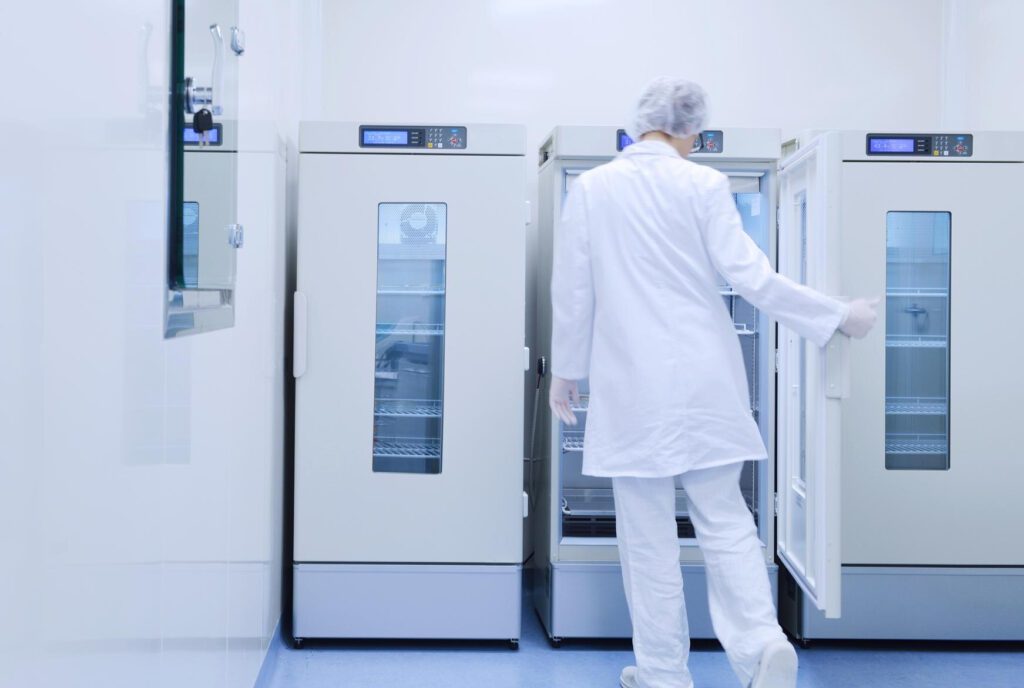
The primary challenge lies in validation costs and technical requirements. Specialized equipment and trained technicians are needed to verify that cabinets maintain proper airflow patterns and containment capabilities.
Many Ukrainian laboratories, particularly those in primary and specialist care settings, cannot afford regular validation services.
Essential maintenance activities:
- HEPA filter replacement at recommended intervals
- Electronic component inspection and calibration
- Airflow pattern verification
- Containment testing
Target facilities: Clinical laboratories, TB hospitals (first and second grade), infectious disease departments
Potential agency support: Agencies can subsidize or fully cover validation costs, establish maintenance contracts with qualified service providers, or support the procurement of validation equipment for regional laboratory networks.
3. Provisions of Radiometers
Ultraviolet germicidal irradiation (UVGI) lamps play an important role in reducing airborne bacterial contamination in healthcare settings. However, without proper monitoring, facilities cannot verify whether these systems function effectively.
Radiometers help to determine whether the UV output, produced by the germicidal lamps, is enough to kill all the germs.
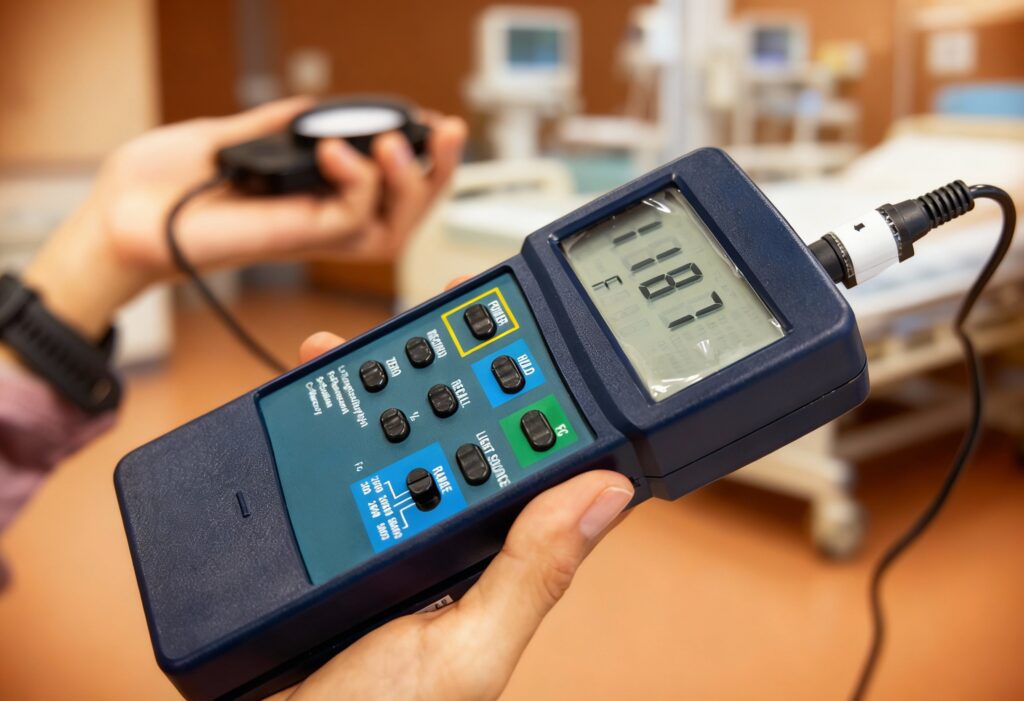
This intervention represents a relatively low-hanging fruit for agencies seeking to improve IPC infrastructure:
- The equipment is widely available on the market
- It is portable – you don’t need to install it
- It usually comes with a decent warranty > 2 years
But there is a catch – there are some basics you have a learn. And by basics mean not only an operational manual or some “features” of the particular model. Most of our medical staff have never used it before, so they should be familiar with how to read the numbers.
Implementation approach:
- Distribute radiometers to facilities using UVGI systems
- Conduct training sessions on proper measurement techniques
- Establish protocols for regular lamp output monitoring
- Connect facilities with sector experts for technical guidance
Target facilities: Primary care clinics, specialist care hospitals, and any facility using UV bactericidal lamps
Agency advantage: This intervention requires minimal ongoing costs after initial distribution and training, making it sustainable for facilities to continue independently.
4. Closed System Drug Transfer Devices
Certain medications, particularly chemotherapy agents, are better not to leak into the environment. Exposure to them, even in the smallest amounts, with inhalation or skin contact, can lead to significant health issues, specifically for those staff working with them for years.
Closed system drug transfer devices (CSTDs) can contain those medications safely and safeguard health workers and patients.
Procurement of these systems for each individual patient can be a serious financial burden for hospitals with oncology, hematology, or transplantation departments.

Primary beneficiaries:
- Oncology departments
- Hematology units
- Emergency departments handling chemotherapy patients
- Surgery and transplantology departments
- Pharmacy compounding areas
Implementation requirements. Agencies must work closely with facilities to assess current practices, identify appropriate CSTD systems for their workflows, and provide comprehensive training on proper use. This intervention works best when integrated into broader programs supporting oncology or specialty care.
5. Sharp Container Distribution
Sometimes the simplest interventions address the most persistent needs. Sharps containers prevent needlestick injuries and the transmission of bloodborne pathogens, including HIV, hepatitis B, and hepatitis C.
While often taken for granted in well-resourced settings, Ukrainian health facilities continue to experience shortages of these basic safety supplies, particularly as the ongoing conflict disrupts supply chains and strains budgets.
This intervention suits both humanitarian and development actors across all levels of care. The need is universal, implementation is straightforward, and the impact on healthcare worker safety is immediate and measurable.

Why this remains critical:
- Ongoing conflict disrupts regular supply chains
- Budget constraints force facilities to prioritize clinical supplies over safety equipment
- High staff turnover necessitates continuous availability of safety supplies
- Prevention of occupational exposure protects an already strained healthcare workforce
Implementation flexibility: Sharp container distribution can stand alone as a quick-impact intervention or integrate into comprehensive waste management programs. Agencies can combine distribution with training on safe injection practices, waste segregation protocols, and occupational health monitoring.
Target facilities: All levels of care, from primary health centers to tertiary hospitals
Conclusion
Infrastructure-based IPC interventions offer agencies tangible ways to improve patient and healthcare worker safety in Ukrainian health facilities. While some interventions require significant technical expertise and resources, others provide accessible entry points for organizations of varying capacities.
When selecting interventions, agencies should consider their technical expertise, financial capacity, and existing relationships with health facilities. Ventilation and biological safety cabinet programs demand specialized knowledge and sustained funding. Radiometer distribution and sharps container provision offer more accessible options that still deliver meaningful IPC improvements.
Regardless of the chosen intervention, success depends on collaborative planning with health facilities, engagement of technical experts, and commitment to both initial implementation and ongoing support. In the context of Ukraine’s protracted conflict, these infrastructure investments protect not only individual patients but also the healthcare workforce upon which the entire health system depends.
Leave a Reply