
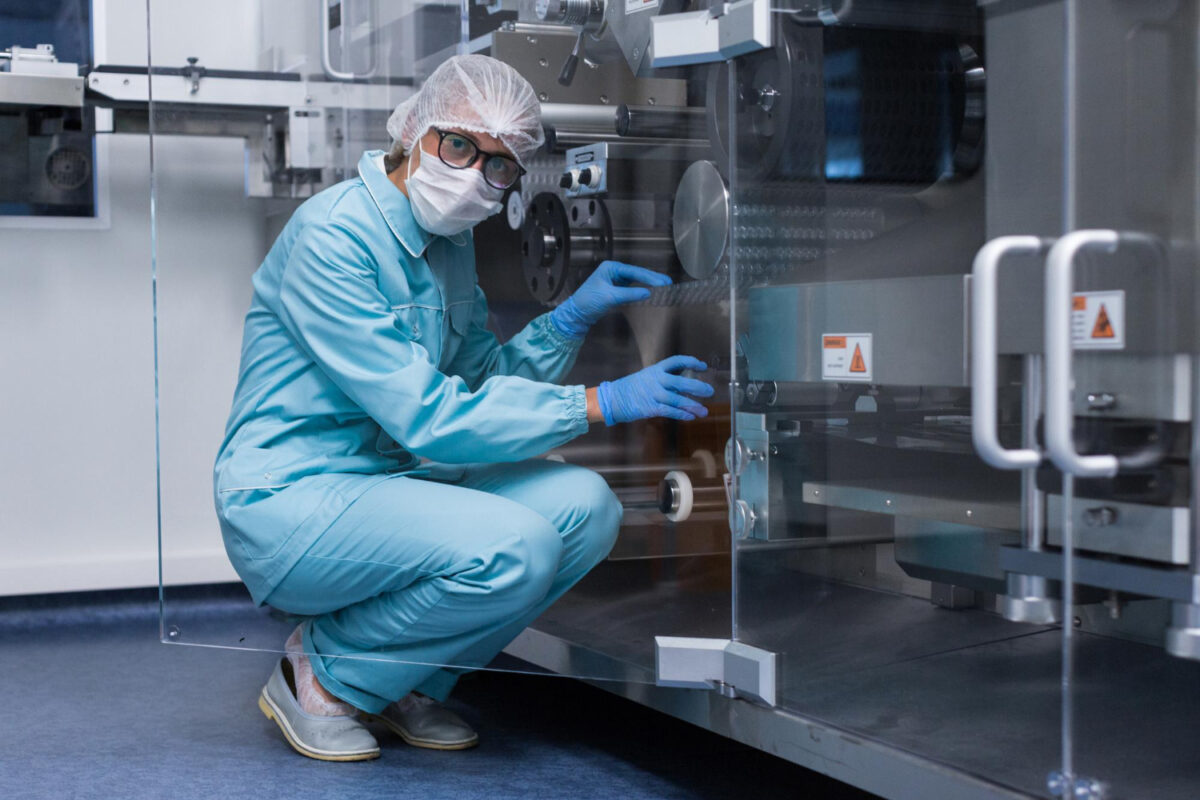
Infection prevention and control in healthcare facilities isn’t just about washing hands and following protocols—though those are crucial. The physical infrastructure of a facility can either support or undermine even the best IPC practices. Think of it this way: you can train staff perfectly, but if your building is working against you, you’re fighting an uphill battle.
- Fresh Air Isn't Just Nice—It's IPC Gold
- When Fresh Air Isn't Enough: Negative Pressure Rooms
- Breaking the Contact Chain: Go Touchless to Bost IPC
- The Heart of the Matter: Sterilization Service Departments
- Automatic Doors: IPC Meets Universal Design
- Making It Happen: Practical Considerations
- The Bottom Line
In the previous article, our expert Nadiia already touched on the surface of the evidence-based infrastructure interventions that can genuinely strengthen IPC across different types of healthcare facilities.
This time, we come up with another 5 interventions focusing on IPC infrastructure, which patients and staff would interact with.
Fresh Air Isn’t Just Nice—It’s IPC Gold
Here’s something fascinating: a recent study led by Diana Bastien and Dusan Licina from research institutions in Denmark and Switzerland looked at what happens when you give people real-time feedback about CO2 levels in their spaces. They wanted to know if making people aware of air quality would actually change their behavior—would they open windows more often?
The results? Ventilation rates doubled in about 70% of the spaces they monitored. Just by knowing when the air quality was getting poor, people took action. It’s a beautiful example of how awareness creates positive feedback loops.

What does this mean for healthcare facilities? The devices they used ranged from fancy units with dashboards and big screens to super simple monitors that just alert you when CO2 is reaching unhealthy levels. For a primary care office or outpatient clinic, putting one of these monitors on the doctor’s desk could be transformative. It’s a great reminder for letting the room breathe and an effective tool for boosting the IPC.
Right now, improving natural ventilation is considered a top-priority intervention in many settings, sometimes even more effective than bactericidal UV lamps (especially if you don’t have radimeters to measure their efficiency). And it’s so simple. Just letting fresh air in can solve multiple problems at once.
When Fresh Air Isn’t Enough: Negative Pressure Rooms
Primary care facilities might do fine with better ventilation, but hospitals—especially those with infectious disease departments, TB centers, or surgical wards—need more robust containment strategies.
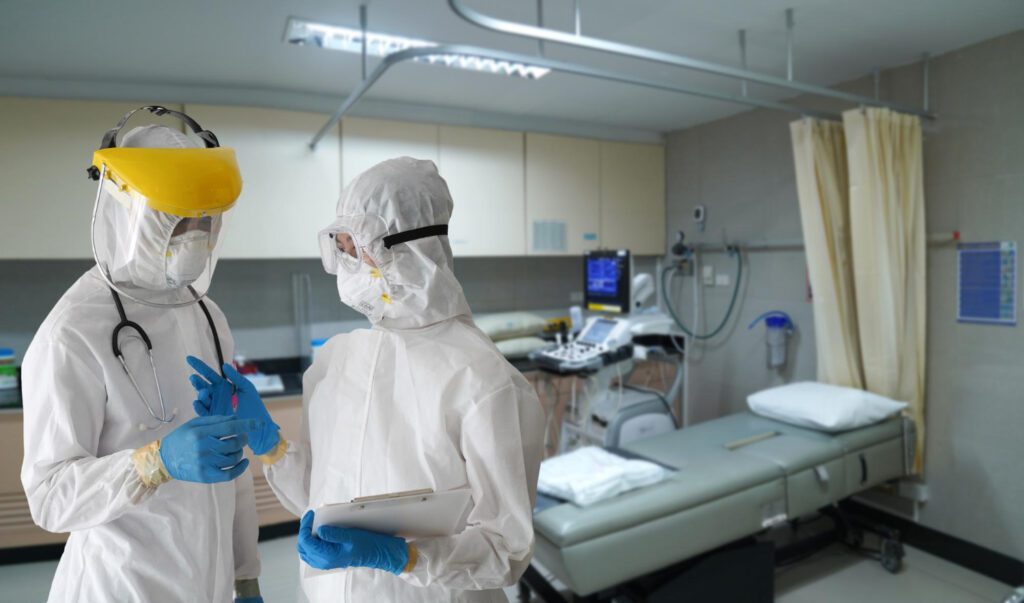
Every hospital in Ukraine should have a negative-pressure isolation capacity. These are specialized rooms where the air pressure inside is lower than the surrounding areas, which means air flows into the room, not out of it. Why does this matter? Because if you have a patient with a suspected or confirmed contagious disease—tuberculosis, COVID-19, measles, you name it—the contaminated air stays contained. It can’t drift out into the hallway or reach other patients.
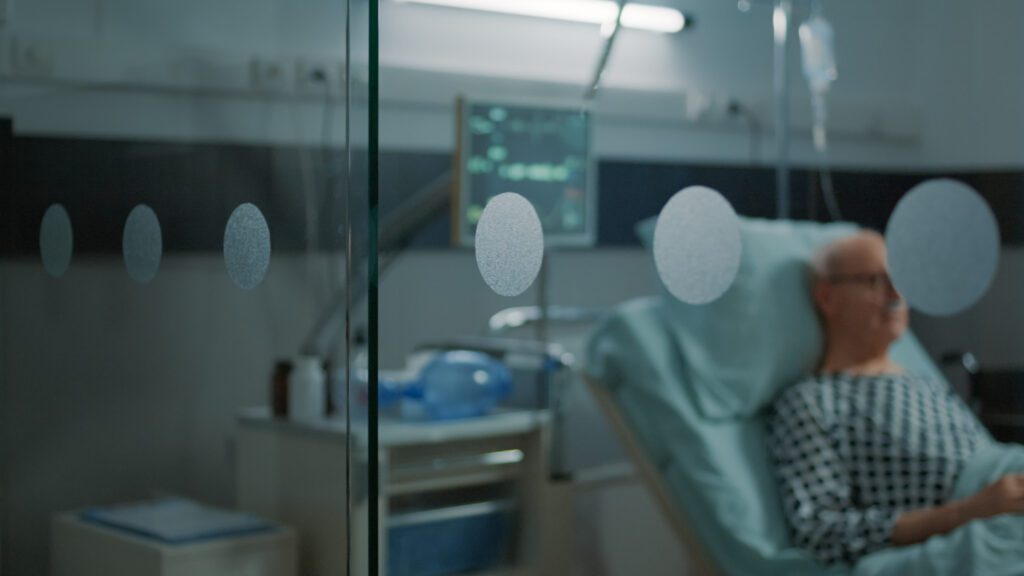
The physics is straightforward: negative pressure compared to the environment means one-way airflow—in, not out. There are currently four main types of isolation rooms, two of which (Class N and Class Q types) are negative pressure.
These rooms aren’t optional infrastructure for modern hospitals. They’re essential for managing infectious patients safely, protecting both other patients and healthcare workers from airborne transmission.
Breaking the Contact Chain: Go Touchless to Bost IPC
One of the simplest infrastructure upgrades you can make is eliminating unnecessary physical contact points. Infections spread through touch—it’s one of the most common transmission routes, both for diseases patients bring into the facility and for preventing cross-contamination between patients.
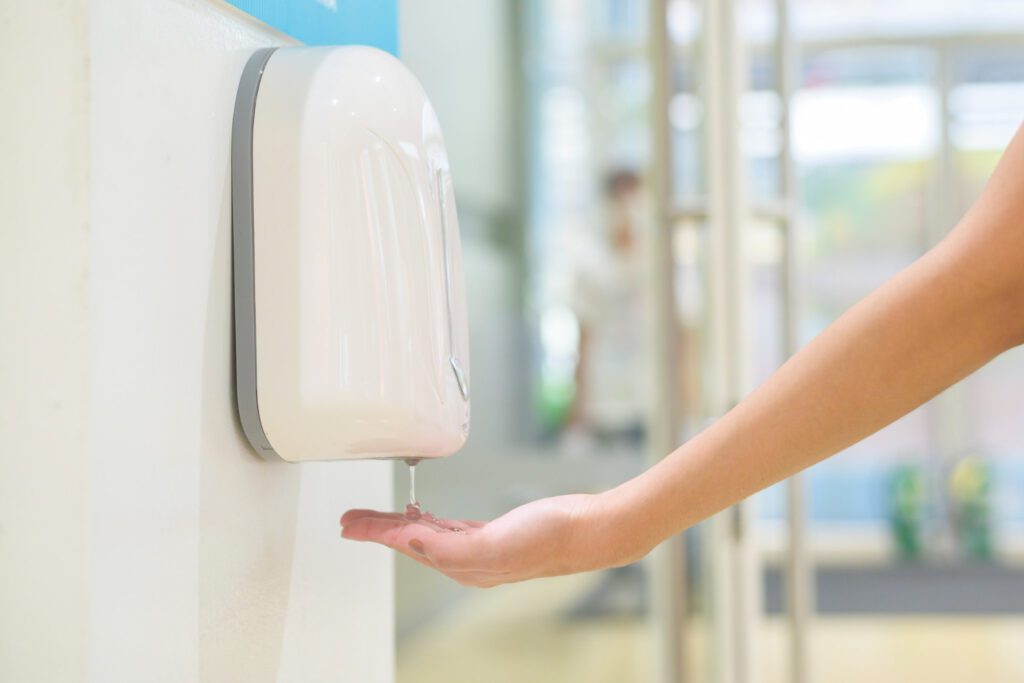
The solution? Sensors everywhere:
- Sensor-activated water taps (no more touching contaminated faucets);
- Automatic liquid soap dispensers;
- Touchless hand sanitizer stations.
These aren’t luxury items—they’re practical IPC tools, but Soviet era hospitals in Ukraine, which account for more than 80% of health facilities in the country, do not have them.
Patients and visitors appreciate these modern additions and rate facilities higher in both safety and quality.
The Heart of the Matter: Sterilization Service Departments
Now let’s talk about specialized care—multi-disciplinary hospitals, large regional facilities, and infectious disease centers. These places need a properly functioning Sterilization Service Department (SSD). This isn’t negotiable.
SSDs provide centralized reprocessing of medical devices. Without proper sterilization infrastructure, you’re putting patients at serious risk every time you use a reprocessed instrument.

Know Your Risk Categories
Medical devices fall into different risk categories based on how they’re used:
High-risk devices need complete sterilization:
- Surgical instruments that penetrate tissue
- Implants and prosthetics
- Rigid endoscopes
- Syringes and needles
Intermediate-risk devices need high-level disinfection:
- Respiratory equipment
- Non-invasive flexible endoscopes
- Anesthesia equipment
- Urinary collection bottles
Each category requires different processing levels, and your SSD needs to handle all of them correctly. The higher the risk, the more resources SSDs need to properly decontaminate and pack the equipment.
The Complete Reprocessing Chain
The World Health Organization’s guidance on decontamination and reprocessing of medical devices lays out the essential steps. Your SSD should manage the first five steps of this chain:
- Collection and transport from clinical areas
- Cleaning to physically remove contamination and organic material
- Disinfection using validated chemical or thermal methods
- Sterilization for high-risk items
- Packaging to maintain sterility until use
Then comes storage, use, and transportation back to SSDs.
What Does a Proper SSD Need?
Infrastructure requirements aren’t trivial:
- Separate zones for dirty and clean processing (strict workflow separation)
- Industrial washer-disinfectors with validated cycles;
- Steam sterilizers (autoclaves) with monitoring systems;
- Alternative sterilization for heat-sensitive devices (ethylene oxide, hydrogen peroxide systems);
- High-quality water systems (water purity directly impacts sterilization effectiveness);
- Sealed packaging devices
- Quality monitoring: biological indicators, chemical indicators, documentation systems
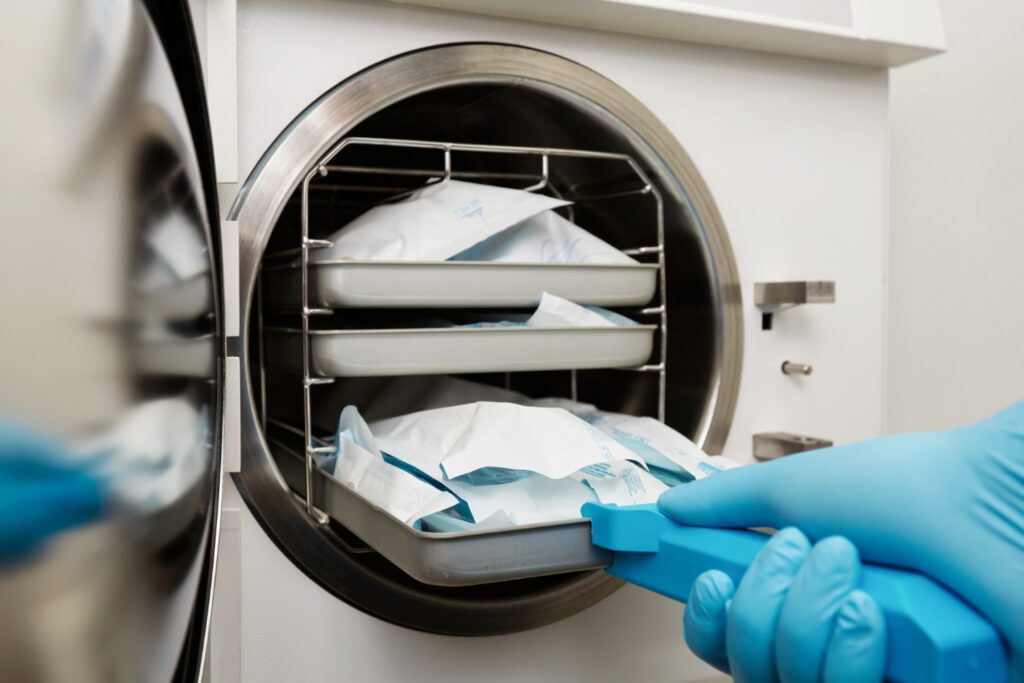
This isn’t a small investment, but the risks are quite significant, and the economic burden of hospital-associated infection is estimated by NIH at 28 -45 billion USD in the US alone.
Automatic Doors: IPC Meets Universal Design
Here’s where infection control and accessibility beautifully intersect: automatic doors operated by infrared or motion sensors.
From an IPC perspective, automatic doors eliminate another contact point. No one touches door handles—which means fewer opportunities for pathogen transmission. This is especially valuable in surgery departments where maintaining clean hands is critical, or in high-traffic areas where door handles get touched constantly.

But there’s more. The Americans with Disabilities Act specifies that doors should open with minimal force—about 5 pounds (2.2 kg). Automatic doors blow past this requirement by requiring zero force. They’re a game-changer for:
- Patients with mobility limitations
- Healthcare workers transporting equipment
- Anyone assisting or accompanying patients
- Staff moving between areas with gloved, sterile hands
Think about a surgeon exiting an OR with sterile gloves—automatic doors mean they don’t have to compromise sterility to get through the doorway. Or consider a patient in a wheelchair navigating your facility independently. Automatic doors remove barriers on multiple levels.
This is infrastructure that solves two problems simultaneously: stronger infection prevention and genuinely improved accessibility. That’s an efficient investment.
Making It Happen: Practical Considerations
When you’re planning infrastructure improvements, keep these factors in mind:
Budget realistically: Interventions range from affordable (CO2 monitors, sensor faucets) to significant capital investments (negative pressure rooms, full SSDs). Prioritize based on your facility type and the populations you serve.
Maintenance plan: Every system needs ongoing care. Budget for service contracts, spare parts, and staff training from day one.
Train your people: New infrastructure only works if staff know how to use and maintain it properly. SSDs especially need personnel trained in international standards.
Validate and monitor: How do you know your systems work? Implement quality assurance—biological indicator testing for sterilizers, maintenance logs, and performance verification.
Phase it in: Limited resources? Develop a prioritized plan. Start with the highest-impact, most cost-effective interventions and build from there.
The Bottom Line
Infrastructure for infection prevention and control isn’t glamorous, but it’s foundational to safe healthcare delivery. A CO2 monitor in a primary care office, negative pressure rooms in a regional hospital, touchless fixtures throughout a facility, properly equipped SSDs—these aren’t extras. They’re the physical framework that makes effective IPC possible.
The evidence keeps growing: environmental controls and proper equipment don’t just complement behavioral measures—they multiply their effectiveness. In a world facing antimicrobial resistance and emerging infectious diseases, robust infrastructure isn’t optional.
Whether you’re planning a new facility or upgrading an existing one, think of IPC infrastructure as creating environments that inherently support safer care. It’s not about adding complexity—it’s about building intelligence into the physical spaces where healthcare happens. When the building itself works in favor of infection prevention, everyone benefits: patients, staff, and the broader community.
Leave a Reply