

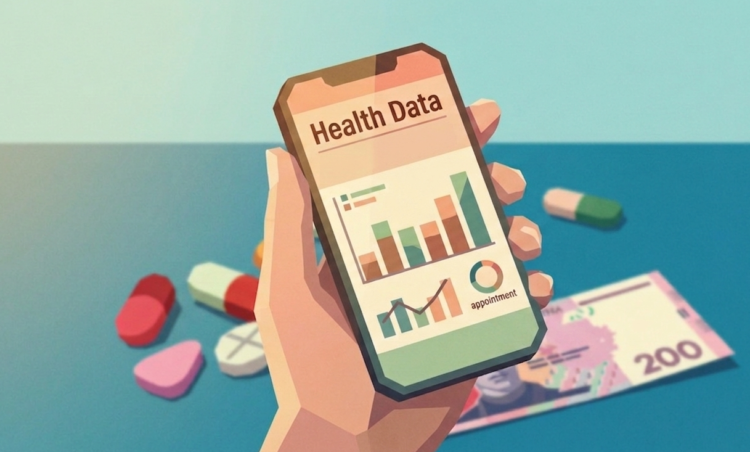
The Organisation for Economic Co-operation and Development (OECD) has approved Ukraine’s accession to its Recommendation on Health Data Governance — a significant step in the country’s digital health transformation and its broader path toward alignment with international standards.
What Is the OECD and Why Does It Matter?
The OECD — the Organisation for Economic Co-operation and Development — is an international body of 38 countries with predominantly developed economies. It functions as a platform for sharing policy experience, developing common approaches to economic and social development, and coordinating member states’ domestic policies. A further 70 countries hold partner status and participate in various OECD initiatives. Joining an OECD recommendation means aligning national practice with the standards of this elite group of nations.
What the Recommendation Is About
The OECD’s health data governance recommendations define how countries should store, process, and use people’s health data — not only to protect it, but to actively leverage it for the benefit of patients and the health system as a whole. The framework emerged in part from the OECD’s research on building people-centred digital health systems, which identified several priority areas:
- Patient access to their own medical records — ensuring individuals can view and use their health data.
- Breaking down siloed systems — linking disconnected electronic medical systems so patients no longer need to act as their own document couriers between providers.
- Empowering patients to act on their data — enabling people to use health information to make better lifestyle choices and take control of their wellbeing.
The full OECD report is available here – Building People-Centred Digital Health Systems.
Ukraine’s Progress So Far
Ukraine has already made considerable advances in digital health. The national electronic health system now holds over 5 billion medical records, with new digital tools and services being introduced continuously. Deputy Minister of Health for Digital Development Mariia Karchevych framed the accession: “Ukrainian digital health meets international standards.”
Expert View from Team of AidNotes
The issues identified by the OECD research are directly relevant to Ukraine. Disconnected, proprietary systems installed across the health sector have in practice turned patients into data carriers — moving paper or digital records manually between facilities. Patients deserve better access to their own data, and the conditions to act on it.
Harmonizing data to common standards opens the door to tools that can genuinely help — an AI assistant, a fitness app, a dietary or lifestyle platform — that can receive structured health data and translate it into actionable guidance. This pipeline is challenged by lack standardization across the major digital health providers.
Read more about digital health and patient empowerment in Ukraine: Assessment of Internet Access in Rural Conflict-Affected Areas of Ukraine.