Procurement Policy in Ukrainian Context
You’ve decided to start an NGO. You want to help people. You have a mission, a team, and the energy to make it happen. Good.
But here’s what doesn’t get talked about during those excited first weeks: almost everything your organization does costs money. And how you spend that money—from Day 1—sets the foundation for whether donors, partners, and regulators trust you.
Your office needs a lease. Your team needs laptops, software, IT support. Your field workers need supplies. You need vehicles. You need to hire contractors. You need to pay for training. You need to procure medical equipment, fuel, food, communications gear.
Everything—literally everything—is procurement.
So the question isn’t whether you need a procurement policy. The question is: are you going to be deliberate about it, or are you going to fly by the seat of your pants?
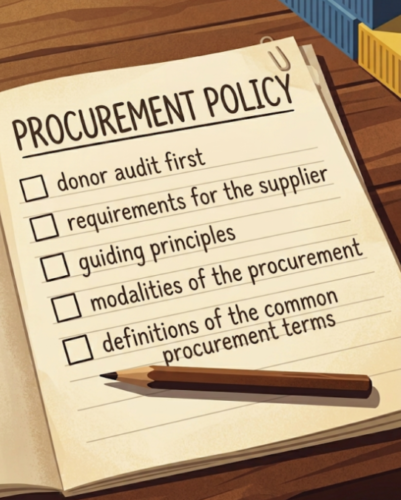
The 8 Elements Every Procurement Policy Must Include
Don’t overcomplicate this. You need these 8 things:
1. Guiding Principles
Humanitarian principles, transparency, accountability, “best value for money” should lead the list.
2. Scope & Applicability
What it is: What’s covered (goods, services, facilitation) and what’s not (staff payroll, individual consultants, grants to partners).
Why: Clear boundaries prevent confusion.
3. Procurement Thresholds & Methods
What it is: Based on dollar value, what process do you use?
Example:
- $50–$1,000: Direct procurement (1 supplier, simple)
- $1,001–$10,000: Request for Quotation (3 quotes required)
- $10,001–$50,000: RFQ/RFP (3+ proposals, bid analysis)
List goes beyond, but I think you have gotten the point: higher the procurement value the more rigorous process your organization should follow and more documents required to complete it.
4. Supplier Eligibility & Ethical Standards
What it is: How you select suppliers; what’s your baseline for working with them.
Includes:
- Legal standing (registered, licensed entity in Ukraine)
- No bankruptcy or insolvency
- Sanctions screening (OFAC, EU, UN, national lists)
- No child labor, forced labor, human rights violations
And other “common sense” things, like supplier’s integrity – it should have a clean history with no fraud or other rad flags.
5. Evaluation Criteria
What it is: How you decide who wins—not just lowest price.
Example: Price (60%), delivery timeline (20%), supplier reliability (20%).
This shows you balance cost with quality and reliability.
6. Prepayment Policy
What it is: When and how much you pay upfront.
Key principle: Category-based, not a universal cap.
This reflects reality. You can’t impose a 50% cap on electronics imports—suppliers won’t work with you.
7. General Terms & Conditions
What it is: Standard contract language covering:
- Warranty and quality standards
- Inspection and acceptance rights
- Force majeure (what happens if circumstances beyond control prevent delivery)
- Dispute resolution (how conflicts are handled)
- Termination for cause (what if supplier fails to deliver)
- Bankruptcy provisions (what if supplier goes bankrupt mid-contract)
- Tax exemption (if your NGO is tax-exempt, supplier reflects that in pricing)
- Conflict of interest and officials-not-to-benefit clauses
8. Approval Authority & Documentation
What it is: Who approves what, and what records must be kept.
Example:
- <$5,000: Program Manager approves
- 5000 – 50.000 – Project Director