

Abstract
Digital infrastructure can be as critical as physical infrastructure, especially in the areas affected by the crisis.
In Ukraine’s context, prolonged armed conflict and the current economic situation make the establishment of new health facilities or the rehabilitation of damaged ones exceptionally challenging..
This article presents a cross-sectional study of internet access, which has a single aim:
Is it feasible to implement telehealth solutions in Ukrainian conflict-affected villages?
Background
Armed conflict in Ukraine has significantly disrupted physical access to healthcare, rehabilitation, and psychosocial support services, particularly in rural areas.
Digital health solutions might be an excellent supplement to the deployment of the mobile teams or, in some cases, even a standalone solution to the lack of service delivery.
However, successful implementation depends on two factors:
- access to the internet and its utilization (infrastructure and resource domain)
- The practical ability of beneficiaries to use basic digital services (skill domain).
Urban vs Rural
It goes without saying that the population of the largest Ukrainian cities has both access and capacity to utilize digital services, while rural conflict-affected communities are frequently perceived as excluded from such solutions.
This study was designed to assess this assumption empirically and to generate operationally relevant evidence for program design.

Methods
A cross-sectional controlled study design was applied. Data collection was conducted by mobile rehabilitation specialists (MRS) and psychologists as part of routine field activities.
Study population
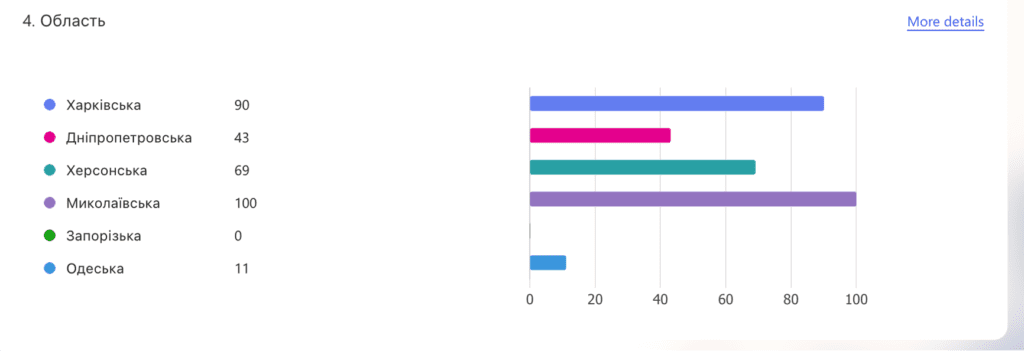
A total of 313 individuals were interviewed:
- 43 respondents from urban areas (control group)
- 270 respondents from rural areas (study group)
The study has been conducted across five oblasts: Kharkiv, Mykolaiv, Dnipro, Kherson, and Odesa city.
All areas included in the study were conflict-affected at the time of data collection.
Survey instrument
The assessment consisted of:
- A structured 12-question questionnaire focusing on device ownership, internet access, and routine digital behavior
- One practical task designed to assess functional digital skills
Practical test
Participants were asked to:
- Receive a verification code via a messenger application
- Enter the code into an official government website
This task was selected to reflect a real-world digital interaction commonly required for accessing public services.
Results
Access to internet-enabled devices
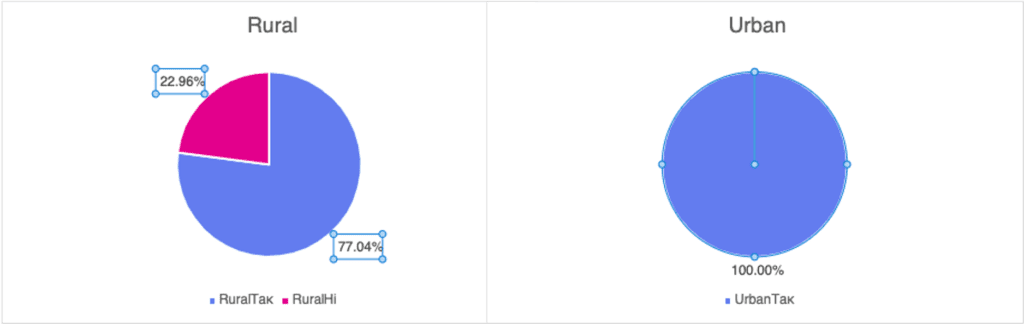
- Rural areas: 77% of respondents reported having access to a device with internet connectivity
- Urban areas: 100% of respondents reported access to such a device
In rural households, device access was frequently shared among family members rather than individually owned.
Use of messenger applications
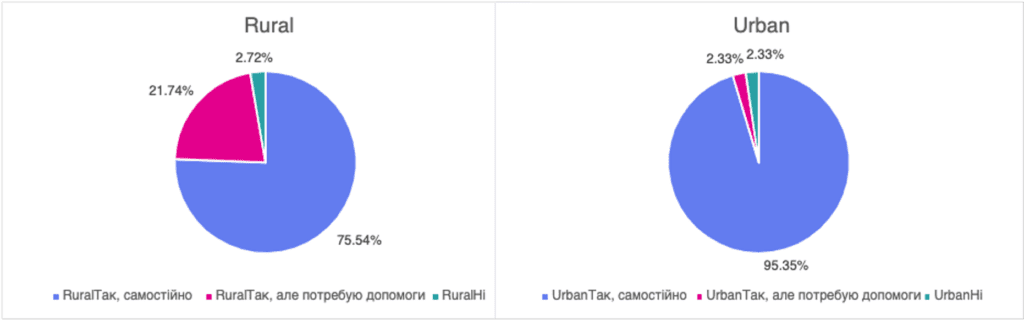
Among those who had access to an internet-enabled device:
- Rural areas: 75% reported regular use of messenger applications
- Urban areas: 93% reported regular use
This indicates that once access barriers are removed, routine digital communication behaviors are broadly comparable.
Practical digital skills
Among participants who were able to attempt the practical test:
- No meaningful difference in task performance was observed between rural and urban respondents
However, rural participants were more likely to be unable to complete the task due to:
- Temporary lack of internet connectivity at the time of the interview
- Absence of an internet-enabled device, as it is shared by several family members
Importantly, these barriers were related to access rather than to digital literacy or skill level.
Conslusion
Approximately four out of five rural respondents were able to access the internet, and a substantial majority were familiar with messenger applications.
This level of access provides a solid foundation for rolling out both asynchronous and synchronous digital health interventions, including telehealth, telerehabilitation, and telepharmacy services.
These findings support continued investment in remote service delivery models, including national initiatives such as the telepharmacy services launched by Ukrposhta Pharmacy in 2024.
Our team can tell with some confidence that with proper attention to the connectivity of the rural areas in Ukraine, telemedicine can play a pivotal role in reconnecting communities to health.
Leave a Reply