

Introduction
Cash assistance is fundamental for any humanitarian or crisis response, reaching $7.9 billion globally in 2022. But here’s the challenge: “How would you measure the success?“
When recipients can spend money however they choose—which is the whole point of multi-purpose cash—traditional monitoring gets complicated. This flexibility of cash can be a curse for any program designer and real challenge for the MEAL department.
You can’t borrow the metrics from any of the existing sectors – they can measure improved health or reduced risks of infection, you just can’t – beneficiaries have their own priorities, that we ought to respect with MPC support. The cash in MPCA is as unconditional as humanitarian program can be.
Measuring MPCA
The good news? You don’t have to re-invent the wheel as there are handful of indicators, provided by the CALP Network and IndiKit, tested in the real world and vetted by variety of experts in the field and funding partners.
In this article, we are going to walk you through the most powerful and practical seven indicators for your MPCA program.
1. Basic Needs Capability
What you measure?
Percentage of households who report being able to meet their basic needs as they define and prioritize them.
Why it matters?
This is the heart of cash assistance. You’re asking people the simple but profound question: can you meet your needs?
The indicator doesn’t define “basic needs”, but instead assumes the complete spending flexibility of the beneficiaries. A family in Dnipro might prioritize heating and medicine, while a family in a different context focuses on food and shelter. By letting people define their own needs, you respect their agency and get a more honest picture of whether your program is working.
This question cuts across everything—food, housing, health, education, protection. It’s your program’s report card from the people who matter most: the recipients themselves.
How to ask it?
“Over the past month, has your household been able to meet its basic needs as you define them?”
Then follow up with “Which needs are you able to meet? Which ones are still difficult?“
2. Minimum Expenditure Basket
What you measure?
Percentage of households with total monthly expenditure that exceeds the Minimum Expenditure Basket.
Why it matters?
While the first indicator asks people’s opinion, this one looks at the numbers. The Minimum Expenditure Basket (sometimes called MEB) is a calculation of how much money a household actually needs to cover basic necessities in your specific context.
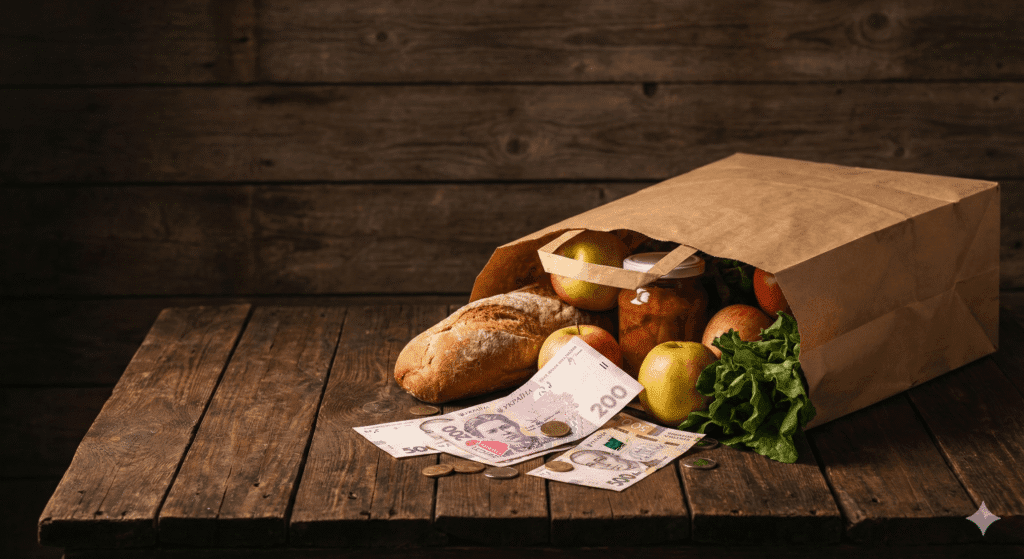
Think of it as the local poverty line for humanitarian purposes. It includes costs for food, rent, utilities, hygiene items, transportation—whatever people need to get by. In Ukraine, for example, the MEB is set at 3,600 UAH per month (as of October 2023. With the iflation rates are around 12%, it is around 5000 UAH in 2026). In Myanmar, it’s 480,796 MMK, with food accounting for 65% of that amount.
By comparing what households actually spend to the MEB, you can see the financial gap your assistance is filling. If most households still can’t afford the basket even with your assistance, you know the transfer value might need adjustment.
How to measure it?
Survey households about their total monthly spending across all categories—not just how they spent your cash. Divide their total spending by the number of household members to get per-person figures, then compare to the MEB.
3. Livelihood Coping Strategies
What you measure?
Percentage of households using harmful coping strategies to meet their needs, by severity level.
Why it matters?
This indicator answers a critical question: how are people actually managing? Are they meeting their needs through your assistance, or are they resorting to desperate measures that will hurt them in the long run?
Coping strategies come in three levels of severity:
Stress strategies (manageable but not ideal):
- Spending savings that should be kept for emergencies
- Buying food on credit
- Taking on extra work
Crisis strategies (harmful to future wellbeing):
- Selling tools or equipment needed for work
- Pulling children out of school
- Taking on high-interest debt
Emergency strategies (severe and often irreversible):
- Begging
- Selling land or housing
- Sending children to work
When families move from stress to crisis or emergency strategies, it’s a red flag. Even if they’re meeting immediate needs, they’re destroying their ability to support themselves in the future.
How to track it?
Ask households what strategies they’ve used in the past 30 days to meet their basic needs. Don’t just count how many use coping strategies—track which types, because there’s a huge difference between someone spending savings versus someone selling their home.
4. Food Consumption Score
What you measure:
Percentage of households in each food security category:
- Poor,
- Borderline,
- Acceptable.
Why it matters?
No matter what your cash program is designed for, people almost always spend a significant portion on food. That makes food security a reliable way to measure program impact.
The Food Consumption Score looks at both how often people eat and how varied their diet is. It’s not just about whether people are hungry—it’s about whether they’re getting enough nutrition from different food groups.
Here’s how households are categorized:
- Poor (score 0-21): Eating mostly starches with little else. Maybe some vegetables or oil, but rarely protein or fruit. High malnutrition risk.
- Borderline (score 21.5-35): Better than poor, but still limited. Eating staples plus some protein and vegetables, but not diverse or frequent enough.
- Acceptable (score above 35): Eating a varied diet with protein, vegetables, fruits, and other food groups regularly.
Programs in Sudan showed marked improvement in these categories after cash assistance, with fewer families in the “Poor” group and more moving to “Acceptable.”
How to measure it?
Ask households how often in the past week they ate from seven food groups: grains/starches, beans/nuts, vegetables, fruits, meat/fish, milk/dairy, and sugar/oil. Frequency and food group variety get weighted differently to create the score.
5. Reduced Coping Strategy Index
What you measure?
Percentage of households who have reduced their use of food-related coping behaviors.
Why it matters?
While the Food Consumption Score tells you what people are eating, this index tells you what they’re doing to manage when food is scarce or money is tight.

The index tracks five specific behaviors people use when they can’t get enough food:
- Eating cheaper, less preferred foods (like eating only rice and oil instead of more nutritious options)
- Borrowing food or money from friends and relatives
- Limiting portion sizes (everyone eats less than they should)
- Adults eating less so children can eat (parents skipping meals)
- Reducing the number of meals (eating once or twice instead of three times a day)
Each behavior gets a score based on how often it happened in the past week and how severe it is. Scores are categorized to align with standard food security phases—basically, low scores mean people aren’t having to skip meals or borrow food, while high scores (19 or above) signal serious food access problems.
This indicator is particularly useful because it catches problems early. Before families run completely out of food, you’ll see them starting to skip meals or reduce portions.
How to use it?
Combine this with the Food Consumption Score for the full picture. Together, they tell you both what people are eating (quality and diversity) and whether they’re having to make difficult choices to get food (access and stress).
6. Safe and Accountable Delivery
What you measure?
Percentage of recipients who report that assistance is delivered safely, accessibly, and with dignity.
Why it matters?
Even the best-designed program fails if the delivery puts people at risk or treats them disrespectfully. This indicator checks whether the “how” of your program is as good as the “what.”
It covers several dimensions:
- Safety. Can people collect their assistance without facing harassment, exploitation, or physical danger? Are payment points secure? Are collection times and locations safe for everyone, including women?
- Accessibility.Can elderly people, persons with disabilities, and others with mobility challenges actually access the assistance? Are there language barriers? Is the location reachable?
- Accountability. Do people know how to file complaints? Do they feel safe doing so? Does anyone actually respond to feedback?
- Respect. Are people treated with dignity during registration, verification, and payment? Is their privacy protected?
Field experience shows this indicator often reveals critical issues that outcome numbers might miss. For example, post-distribution monitoring might show families are meeting their food needs, but also reveal that women felt unsafe traveling to payment points—a problem that needs immediate fixing.
How to measure it?
Ask specific questions beyond “was delivery safe?” Try: “Did you feel safe collecting your assistance? Were there any barriers to accessing it? Do you know how to report concerns? Were you treated respectfully?”
7. Women’s Decision-Making in Cash Use
What you measure?
Percentage of households where women participate in decisions about how to spend the cash.
Why it matters?
Cash doesn’t automatically benefit everyone in a household equally. In many contexts, whoever controls the money makes the decisions. This indicator helps you understand whether cash assistance is reaching all household members or reinforcing existing power imbalances.
Why this matters for your program?
- Protection angle. If women are excluded from spending decisions, it can increase household tension or even lead to violence. You need to know if your assistance is causing harm.
- Effectiveness. Research consistently shows that when women have a say in household spending, families allocate more money to food, health, and children’s needs.
- Long-term impact. Women’s participation in financial decisions can gradually shift household dynamics beyond just this one transfer.
- Important note. Measure this only in households where both men and women are present. In woman-headed households, women are naturally the decision-makers, so including those households doesn’t tell you anything about changing dynamics.
How to measure it?
Use graded response options rather than yes/no:
- Women decide alone
- Women and men decide together
- Men decide after consulting women
- Men decide alone
This gives you a more nuanced picture than simply counting whether women are “involved” or not.
How to Use These Indicators
These seven indicators work best when used together. The perception-based ones (what people say) balance the objective ones (what the numbers show). The food security indicators complement the broader livelihood measures. And the process indicator on safe delivery ensures you’re not just getting results, but getting them the right way.
You don’t need all seven for every single monitoring exercise, but having all seven in your overall monitoring framework gives you a complete picture without drowning in data.
Practical Tips for Implementation
When to measure what:
Survey your full set of outcome indicators at baseline and endline. In between, do lighter check-ins—monthly or quarterly tracking of the food security indicators works well for catching problems early. Post-distribution monitoring (within a month or two of payment) should always include the safe delivery questions.
Break down your data.
Always separate results by sex, age, disability, and displacement status. You’ll often find that what works for one group doesn’t work for another. For example, elderly recipients might report different safety concerns than younger ones, or women might have different experiences than men.
Coordinate locally
Align with your local Cash Working Group. Follow its recommendations and use their scorecard and frameworks.
Adapting to Your Context
These seven indicators are your foundation, but you might need to add context-specific measures:
In conflict zones, track whether people can safely access markets and payment points.
In climate-vulnerable areas, monitor how well people can handle seasonal shocks and weather-related disruptions.
Where markets are struggling, keep an eye on prices, vendor availability, and supply chains.
For programs targeting families with children, add indicators on school attendance and child protection concerns.
Mistakes to Avoid
Survey fatigue is real. More indicators aren’t better if your data quality suffers or your team burns out. Seven core indicators give you what you need—resist the urge to keep adding “just one more.”
Don’t obsess over spending patterns. It’s natural to want to know exactly what people bought with your cash, but honestly? It matters more that their needs are met than precisely how they met them.
Watch for seasonality. Food security changes with harvests and weather. If you measure in July and again in December, you might see differences that have nothing to do with your program.
Actually use the data. The point of monitoring isn’t generating reports—it’s improving your program. Set clear decision rules: if the food security score drops below X, we’ll review transfer values. If safety concerns emerge, we’ll immediately adjust payment procedures.
Don’t ignore gender differences. Household averages can hide important variations in who benefits from assistance.
Final Thoughts
Good monitoring isn’t about perfect data or comprehensive reports. It’s about knowing whether your program is helping people meet their needs safely and with dignity.
These seven indicators—tested across different contexts from Ukraine to Sudan to Lebanon—give you that knowledge without overwhelming your team or exhausting your recipients with endless surveys.
Start with these seven. Adapt them to your context. Use what you learn to make your program better, check these CVA trends for 2026 if you need some inspiration and most important – “practice makes perfect“, just make sure you have an excellent mentor and a strong MEAL manager, who can help to put help to put your evaluation on the right track.
Leave a Reply